
Traditional Bedding: Benefits and Disadvantages
Published:
Updated:
Author: Le Briand Mattress Makers
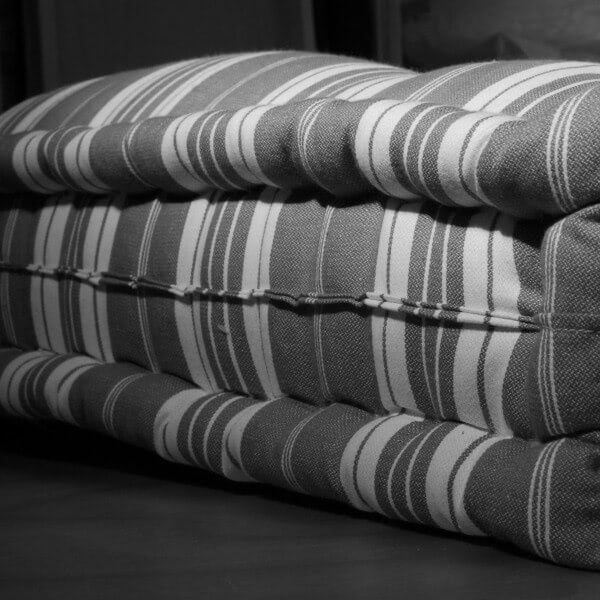
Traditional bedding may be worth considering as you search for a new bed. Its benefits and drawbacks begin with the qualities of its living, natural, and durable materials.
We then shape and work those raw materials into a finished product whose benefits become even clearer.
We must also be candid about the less favorable aspects of traditional bedding so that you can make a fully informed choice.
The Benefits of Traditional Bedding
Comfort
As a rule, traditional bedding provides cozy comfort.
The wool in a mattress yields beneath the sleeper’s weight, much like memory foam. Unlike memory foam, however, it immediately springs back when the sleeper moves. It leaves no lasting body impression.
Because springs move through a wider range than slats, a box spring also adds flexibility, even as it provides firm or very firm support.
Finally, the wool in the mattress has natural properties that provide the following benefits:
- the bed feels warm in winter and cool in summer.
- the wool absorbs perspiration overnight and releases it into the air during the day.
- the bed never feels damp from perspiration, even when outdoor temperatures are very high.
How the Volume of Traditional Bedding Matters
The bed’s ability to regulate moisture depends on the sheer volume of its filling: a 140 × 190 cm mattress contains between 25 and 28 kg of wool.
By comparison, an industrial mattress may use a wool layer weighing only 300 grams per square meter.
Customization and Made-to-Measure Work
A skilled mattress and bedding maker produces each box spring and mattress individually, to measure, using traditional techniques.
Each piece of traditional bedding is therefore unique and tailored to its owner’s expectations.
The firmness level can be adjusted with exceptional precision across a very broad range. If the sleeper is not satisfied after delivery, we can make the mattress firmer. An owner of traditional bedding does not have to endure the wrong firmness or replace the mattress.
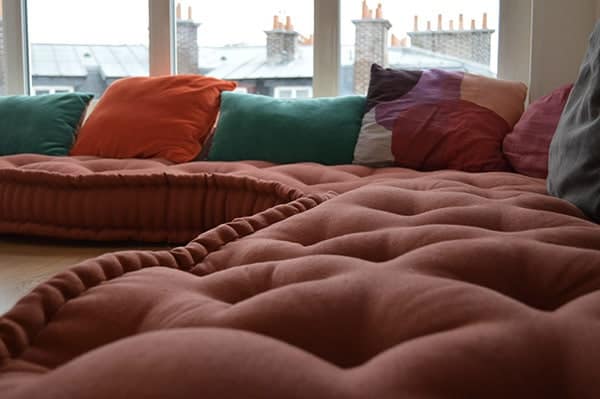
The shape and dimensions can be tailored precisely to the customer’s needs, from very small to very large.
In terms of appearance, the customer chooses a preferred color and pattern from our range of ticking fabrics
Any dimensions are possible. Industrial manufacturers cannot produce sizes to the nearest centimeter or accommodate extremes, whether very small, such as 65 × 160 cm, or very large, such as 300 × 6,000 cm.
Prices
The sticker price of traditional bedding may not seem especially attractive, but it is important to look beyond the initial figure.
For example, a standard 140 × 190 cm wool mattress and box spring set starts at €2,100 including VAT.
A closer analysis reveals the actual financial benefits.
Because of its long life span and ability to be refurbished, traditional bedding should be assessed using two criteria:
- the cost over the product’s entire life cycle
- the effective monthly cost
The calculation rests on two facts:
- Refurbishing a mattress costs about 40% of the price of the same mattress new, while refurbishing a box spring costs about 70% of its new price.
- A piece of handmade bedding has an expected life span of about 60 years, or 720 months.
Calculate the Cost Over the Product’s Full Life Cycle
This example shows that an industrial mattress costs more than a natural wool mattress over the long term.
Assuming that the two options provide comparable comfort, give both the wool mattress and the industrial mattress the same initial price: 100.
If an industrial mattress lasts 10 years, customer A will need to make a third purchase after 20 years and will have spent 300 on three industrial mattresses.
Customer B, who chooses a handmade wool mattress designed to last a lifetime, will have spent 180: the initial purchase plus two refurbishments. That mattress will generally last well beyond 20 years.
The longer the time frame, the greater the difference in full life-cycle cost between industrial bedding and natural bedding handmade in France, thanks to the latter’s exceptional longevity.
The difference is less pronounced for box springs.
Calculate the Effective Monthly Cost
The monthly effective cost is the product’s total cost over its full life divided by its expected life span.
Calculated this way, traditional bedding proves quite affordable over its estimated life span.
At Les Ateliers Le Briand, the effective cost of our bedding products ranges from €3 to €10 per month for a standard 140 × 190 cm size.
At a level of quality equivalent to the work of a skilled mattress and bedding maker such as Le Briand, industrial bedding generally costs three to ten times more than traditional bedding over its full life.
An accident, tear, or stain does not mean that the box spring or mattress must be replaced. Repairs are rarely needed, but when they are, they may cost only a few dozen euros and involve none of the bureaucracy of an industrial manufacturer’s after-sales service.
In every case, refurbishment remains possible and costs less than buying a new industrial product.
Non-Standard-Size Bedding
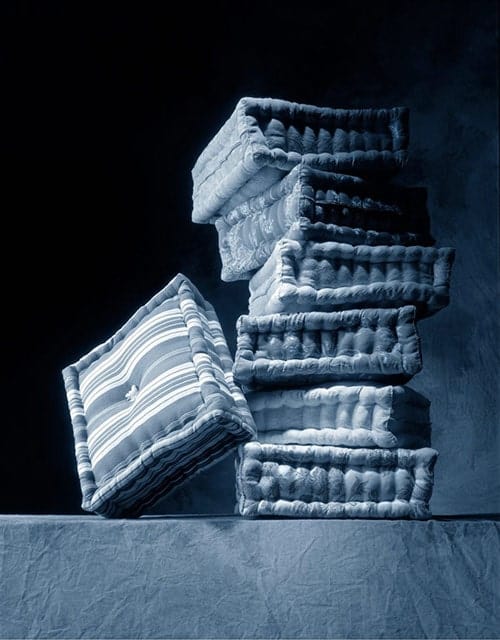
One pricing advantage of one-off production is that customers who need non-standard-size bedding avoid steep surcharges.
Industrial manufacturers charge a 10% to 20% non-standard-size surcharge, depending on the brand and retailer, for each change in width and length. A customer ordering a 136 × 196 cm bed from a manufacturer whose standard 140 × 200 cm size costs 100 would therefore pay between 120 and 140.
With a skilled mattress maker, there is no surcharge for the width and only a €40 supplement for the length, covering a little extra wool and about fifteen additional minutes of work.
In practical terms, a mattress priced at €1,100 including VAT in 140 × 190 cm would cost €1,140 in 136 × 196 cm.
Responsible Consumption
Beyond comfort, customization, and price, choosing traditional bedding also benefits the planet through natural local wool, naturally grown cotton, and durable products.
Choosing traditional bedding also means supporting short local supply chains, reuse, and recycling while reducing reliance on industrial products.
Reuse
We reuse 99% of a mattress, including the old fabric casing, which protects the new mattress in transit. The customer can then use it for rags, a protective sheet, or another purpose.
The only thing we discard from a used mattress is the dust.
The result is less dramatic for box springs: only the wooden frame is reused.
Recycling
Every city has its own recycling system. In Paris, for example, collected waste such as steel and textiles, including cotton, linen, and jute, is sorted and recycled.
Wool and flax tow are 100% natural products. They are agricultural products in their own right.
Wool in particular is now considered agricultural waste, and finding worthwhile uses for it remains difficult.
The remaining materials, including springs, nails, ticking, and jute canvas, come from small manufacturers with long-established local operations.
The Disadvantages
Nothing should be hidden.
Ignoring, intentionally or otherwise, the concerns some people raise would undermine the trust we want to build.
Nothing is perfect!
People most often cite the following drawbacks of this traditional approach:
- Its old-fashioned image
- Its thickness
- Its contoured surface
- Its firmness
- Fear of small pests
- Its price
- The mattress break-in period (the first 3 to 6 weeks of regular use)
- The need to turn it regularly
These drawbacks are highly subjective, rooted in common misconceptions, or do not place any major constraint on sleeping comfort.
Read a more nuanced account of the drawbacks of traditional bedding.
You will see that the drawbacks so often cited are far from insurmountable.
In Conclusion: The Advantages and Disadvantages of Traditional Bedding
Taken as a whole, traditional bedding is worth considering for anyone who values its comfort and benefits, cares about the environment, and is prepared to invest in healthy living.
Le Briand’s mattress and bedding makers have made and repaired natural, traditional bedding since 1880.
That long history is proof that its drawbacks are not so daunting!