
The first weeks with traditional bedding
Published:
Updated:
Author: Le Briand Mattress Makers
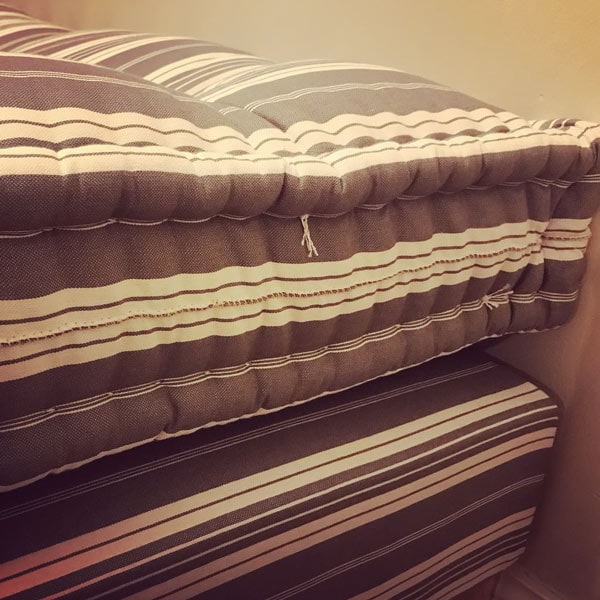
Whether you are new to wool mattresses or returning to them, let us begin with one thing: congratulations!
By choosing this type of traditional bedding, you avoid contributing to the production of toxic waste and help clean the air in your living space. You are choosing tradition, natural materials, environmental responsibility and French craftsmanship from a heritage company.
Through local, made-to-measure manufacturing, we want to make your dreams come true, not sell you dreams. We do so while upholding the values and principles inherent in this kind of bedding.
This guide will support you while you get used to your new bedding and the mattress settles in. It explains the first habits to adopt as you learn how to use and care for it.
Our aim is to help you take this step with confidence and avoid any surprises once your mattress and/or box spring has been made and delivered. We also remain available to answer any questions or concerns.
The adjustment period
After your mattress leaves our workshop, the first few nights may feel unusual: its volume and rounded surface can be surprising. This initial appearance quickly subsides.
At first, encountering a newly made or refurbished wool mattress can be surprising. Our manufacturing work is complete; now your part begins as you get to know the mattress. Remember that the bedding is still very springy and the filling has not yet settled inside its fabric casing.
Getting used to change can take time, especially if this is your first experience with this kind of bedding.
This guide is designed to ease any concerns about that first experience.
The adjustment period varies from a few days to a few weeks. Moving from one type of bedding to another involves a subjective experience that is difficult to predict. This adjustment often coincides with the start of the mattress settling-in period.
The normal mattress settling process itself can feel disconcerting during your first days with a wool mattress and/or box spring. Let us look at the aspects that may surprise you, most of which relate to settling and are completely normal.
Bedding dimensions
When you receive your mattress, whether it is new or newly refurbished, you will almost certainly notice this:
It seems too short !
This is normal. Because the wool is so lofty, the mattress looks thicker and shorter than expected. It needs time to settle and spread fully inside its fabric casing. During the first two months, known as the settling-in period, the mattress will relax. As it does, it will gradually reach its final dimensions, the size for which it was designed: the size of your bed.
If your mattress was stored upright for a few days after it was made, it may also look shorter or narrower than expected.
Simply give it a little time: your mattress is made from natural, living and responsive material.
It is not an inert block. You will see it respond to you, your lifestyle and your sleeping habits.
It will take a few weeks to settle fully, and that is completely normal. From this day forward, you and your mattress are companions on the same journey.
Thickness
When it leaves our workshop, the mattress is also a little thicker and more rounded than it will eventually be.
It is very full!
This is normal. The wool has just been carded, so it is full of air and takes up more room inside the fabric casing. Do not worry: the mattress’s high and low areas will soften naturally and evenly as you sleep on it.
Help this process along by exploring those contours and sleeping across the entire surface.
A traditional mattress leaving the Le Briand workshop has a total thickness of around 20 centimeters. It then loses 3 to 5 cm as the wool settles. After the settling-in period, it is approximately 16 to 18 cm thick.
The mattress reaches its intended dimensions during a settling-in period. Simply sleeping on it gradually settles the wool filling into place.
The tufted surface
More generally, the mattress’s contoured surface can look surprising when you lie down on it for the first time.
Tightening the tufts divides and holds the wool in place, creating a welcoming surface where the body can relax and feel gently cradled. At first, people often worry that the large cushions will feel uncomfortable, but they do not. This shape is a normal feature of traditional bedding.
This makes a wool mattress an excellent companion for the body.
We are confident that it will work for you too; otherwise, we would have recommended another option during our first conversations.
You should have no trouble getting used to this new sensation.
Others have got used to it; why not you?
Firmness
When it arrives, a wool mattress is exceptionally lofty, like a dense cloud.
During the settling-in period, when the mattress must be handled regularly, it gradually softens until it reaches the feel we planned together before manufacturing.
If the firmness of your Le Briand bed still does not feel right after the settling-in period, please contact us again so that we can consider solutions together.
When judging firmness, we often forget that the mattress and bed base work together. We blame the mattress for feeling too hard or soft when it is only the visible part of the system. Bedding comfort must be considered as a whole: was the mattress refurbished more or less than 10 years ago? Does it rest on a solid bed base, slatted bed base, or sprung box spring? Is it kept in a damp room? Many factors can affect how it feels.
External factors, such as how the mattress pairs with the bed base, can therefore explain why a wool mattress remains firm after the settling-in period. We will listen and suggest different courses of action if this happens.
Tufts
When people first encounter a wool mattress, they often ask: will I feel the rosettes?
The rosettes are the small pom-poms characteristic of traditional mattresses, spaced evenly across the surface.
They sit beneath the tufting thread on both sides of the mattress. Once the tufts are tightened and knotted, the rosettes protect the ticking from tearing. Tightening the tufts holds each section of wool in place so the filling cannot shift inside the mattress.
Visually, this tension emphasizes the peaks and hollows, with each rosette at the lowest point. Because those hollows form the surface into which the body settles, you generally do not feel the rosettes.
During the first few weeks, the plump cushions are more noticeable. The rosettes themselves soon fade from awareness.
The wonderful, long-forgotten properties of wool, rediscovered in a traditional mattress
People often assume a wool mattress will feel too warm, but that is not the case. Wool has a remarkable ability to regulate temperature, keeping the sleep environment consistently comfortable. The bedding absorbs your warmth and returns it on a cold night, creating a cozy cocoon. In summer, it retains enough coolness to help prevent you from waking with the discomfort of perspiration.
Moisture regulation is another special property of this natural material. Wool absorbs moisture from your body, helping prevent damp sheets and waking in a cold sweat. Perspiring at night is a completely normal part of the body’s own temperature regulation. Wool absorbs that moisture so the mattress remains dry to the touch, then dries during the day before you return at night. This helps you sleep for longer without unpleasant interruptions and wake feeling truly rested.
Working with wool allows us to design a mattress that closely matches your comfort preferences. Comfort is personal, which is why we do not work from premade stock. We design your entire bedding set to order and entirely to measure, so that you can enjoy the comfort wool has to offer.
The mattress settling-in period
A wool mattress needs time to settle in.
This takes around two months, provided the mattress is used and you sleep across its entire surface.
The exact time depends on several factors: the sleepers’ weight and height, how much they move and perspire at night, the type of bed base supporting the mattress, the bed frame and everyday habits.
Once the mattress leaves the workshop, the sleeper’s work begins!
The natural filling we use, whether sheep’s wool or horsehair, is extremely lofty when the piece is completed and has not yet settled inside its fabric casing when you receive it.
This period is an inherent part of a traditional bed’s early life, allowing it to adapt to its owner and reach its optimal comfort level.
This period begins with the first use.
If you have questions about the settling-in period, for example if it seems to be taking longer, we are only a phone call away.
These are general guidelines. In practice, it is important to rely on your senses as described below.
How do you settle in a wool mattress properly?
The initially prominent cushions of your wool mattress soften as you sleep on them. The goal of the settling-in process is to compress the wool gradually until the entire mattress feels evenly cozy: the peaks and hollows become less pronounced, the slopes grow gentler and the surface becomes softer, more uniform and stable.
To achieve this, it is important to sleep across the entire surface, get to know its contours and use areas where you do not usually lie. If the mattress begins to show impressions too readily under your weight, turn it.
Rotate it from head to foot and flip it from side to side. This gives the entire mattress a chance to settle from its initial loft and sit properly on the bed base.
This may sound strange if you have not yet experienced the pleasures of traditional bedding, but the settling-in period also begins a kind of conversation between the mattress and the sleeper.
The sleeper needs to pay attention to the mattress. Made from natural materials, it responds to how it is used, and you will feel when it needs to be turned. Once turned, the comfort changes again and the mattress cradles you in a different way.
If you ask how often you should turn a newly made or refurbished mattress, it is difficult to give one answer because so many variables are involved.
As a general average, during the first two months, the mattress should be turned once a week. You can turn it more often if you wish, which will help the wool settle more quickly, but once a week is already helpful. After the settling-in period, the interval is closer to 3 or 4 weeks. These ranges are only guidelines and will not match every sleeper’s experience.
In our experience, sleepers often come to appreciate the ritual of turning their mattress. Many tell us that it helps them reconnect with their sleeping space and care for it while also feeling that they are caring for themselves. The mattress becomes more than an object; it becomes a companion in rest.
What a wonderful journey a wool mattress can be!
Depending on the bed frame or the room layout, some areas can take longer to settle. Pay special attention to the following areas so they are not overlooked:
- On a single mattress: the edges
- On a double mattress: the area between the two sleepers, or the edges if only one person uses the mattress.
After the settling-in period
Keep up the habit of turning your mattress.
You will not need to turn it nearly as often as you did during the settling-in period. Turn it whenever it feels necessary, perhaps each time you change the sheets. That is a useful reminder for maintaining the routine.
Some sleepers never turn their mattress, while others do it every two weeks. From this point on, the schedule depends on you.
First habits for caring for traditional bedding
We recommend adopting these simple habits from the settling-in period onward.
The aim is to make them second nature throughout the life of the bedding, for the good of both your bed and your well-being.
Use it
This may seem obvious, but it is worth saying.
The settling-in process requires you to use your newly made or refurbished bed.
Sleeping on it allows the filling to settle gradually. The mattress adapts to your back and to your body at its different points of contact.
If you cannot use it every day, the settling-in period will naturally take longer.
Turn your mattress
Wool responds well to movement.
Head to foot and side to side: turning your mattress regularly restores the wool’s loft and moves it slightly so that it welcomes you afresh and redistributes evenly inside the fabric casing.
This helps prevent uneven compression.
You will notice a subtle, pleasant difference in its softness.
It is a little healthy exercise and a chance to give renewed attention to a piece of bedding that is easily overlooked.
Your mattress will tell you when it needs to be turned. You will feel it. Learn more about how to settle in a wool mattress.
If you have any doubts, please ask us how to turn it effectively.
Air it
Airing the room is very important when caring for traditional bedding, and for any bedroom in general. The natural materials used in your bedding are breathable and living; they need fresh air after the night.
And so on!
Airing also affects any discomfort you may feel from the rosettes discussed above.
After all that, we are willing to bet that you will not regret taking the plunge!
In conclusion: the settling-in period
During this period, the bedding actively adapts to your sleeping habits.
Do not be surprised by the different sleeping experience of handmade, natural bedding! You will gradually get used to it. Changing familiar habits takes time.
Allow around one month of daily use for the mattress to reach its best comfort level.
Use the settling-in period to begin good bedding-care habits that will help it last.
After the settling-in period, continue with other everyday care and cleaning practices.
Topics covered in this guide