A Mattress Maker in the Faubourg – Episode 7
Published:
Updated:
Author: Patrice Sébille
Before the passing years began to weigh on me, I fell asleep like a young child. All I needed was to feel tired and lie down, and in an instant I was in the arms of Morpheus!
The very idea of good bedding was therefore almost foreign to me. At bedtime, I might notice that a bed felt particularly inviting—or quite the opposite—but it mattered little to me. That was a weakness in my commitment as a business owner.
I certainly had good reasons to believe in my product, but they were not the reasons most people would consider important.
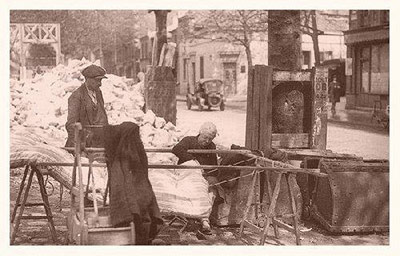
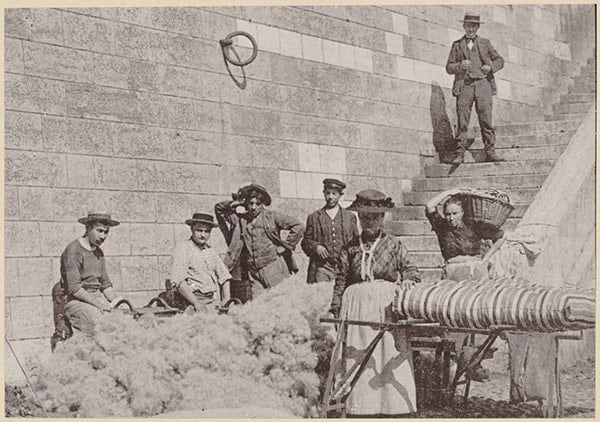
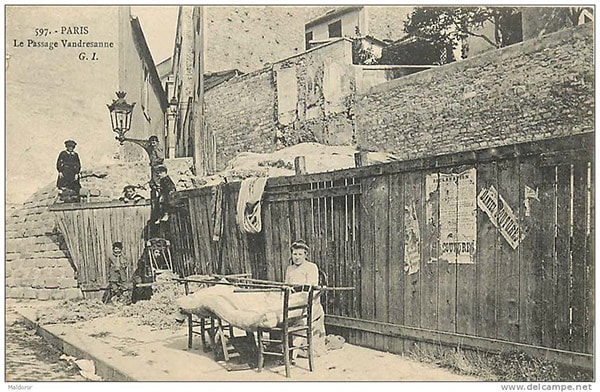
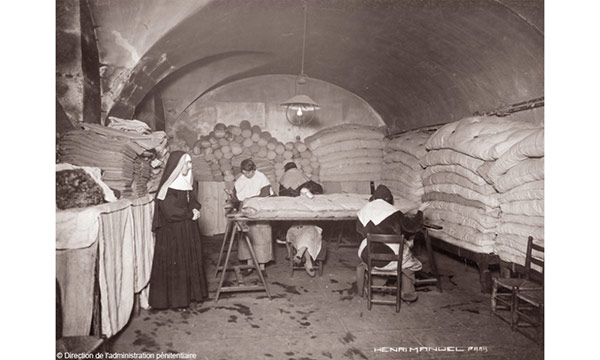
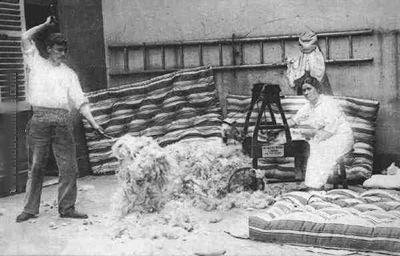
I viewed the wool mattress through an engineer’s eyes. What captivated me was the remarkable ingenuity of our forebears. Over the generations, their movements had been refined until they reached an optimum: the least possible energy was spent for the result achieved.
With next to nothing in the way of tools, and faced with a volume and weight of wool far beyond what physical strength alone could handle, the mattress maker always remains in control. And all of it is done freehand.
Instinct may take longer to develop than learning the proper use of a tape measure and calculator, but I was discovering the extraordinary productivity and precision of skilled bedding makers. Like a long-distance runner, the worker conserves energy to endure, yet never sacrifices the care given to the work.
If such arguments were not enough to persuade the average person, surely it was compelling to see wool—now treated almost as waste by sheep farming—recover both a practical and therefore a commercial value here.
With markets for French agriculture shrinking to almost nothing as the Common Agricultural Policy faced its planned disappearance, reviving a market such as traditional bedding hardly seemed unnecessary to me.
And when you also realize that the wool from a mattress at the end of its life will be reused in full to make a new mattress, every bit as comfortable and durable as the last, what more is there to say? It is sustainable development in its purest form. All that remains is to act.
For several years, my wife had dreamed of a large bed—or at least one larger than our perfectly ordinary bed. Partly from thrift and partly because I was unconvinced that the purchase was worthwhile, I had dragged my feet. Now that I had become a manufacturer, it was difficult to refuse again, even if the bedroom was a little cramped.
Since my predecessor was handing the business over to me during the holiday season, I devised an amusing plan.
I would make the bed, then enlist my ten-year-old son to help wrap it before placing the enormous packages beneath the Christmas tree. It was a symbolic way to mark the handover, a joke for the children, and a lovely surprise for my dear wife. It worked on every level, even better than I had hoped.
One small uncertainty remained: how comfortable would it actually be? I had no concerns and was sure everything would go perfectly, but might some incompatibility spoil my wife’s sleep?
Nothing serious, I told myself. If she did not like it, the mattress would go straight back to the workshop to be taken apart, and by the following day I would think no more about it.
A few days later, however, my wife raised the subject again. You know, she said, since you made this mattress for us, my back no longer hurts!
I had not known about her back pain. It was nothing serious, she explained, but for years she had woken every morning with one tender spot. It was not truly painful, but something caught there and made her feel stiff, right in the small of her back. After half an hour and a cup of coffee, it would pass. Since changing beds, however, it had vanished. She now woke feeling fit and ready at once.
I was stunned. Because I slept like an angel, I had never fully grasped the problem. Yet I understood the power my trade placed in my hands without understanding exactly how it worked. If my customers’ well-being truly depended on me, I trembled at the thought that I might not have a firm enough grasp of that reality.
Until then, I had regarded mattress and bedding making as a purely technical skill, and believed I had made good progress on that front. Now I was discovering its true greatness.
The entire added value that my new craft brought to other people lay in providing well-being. It sounds simple enough, but every person who sleeps on a mattress is different.
My predecessor had never even spoken to me about this knowledge. In these old trades, apprenticeship—and here the word takes on its full meaning—meant becoming one with the profession itself, in all its breadth and complexity.
It happened through long immersion, almost by osmosis, slowly and with scarcely any explanation. There was only the example set by one’s elders, which the apprentice followed as best he could. If he stayed the course, what he gained in the end was called, quite simply, experience.
I had tried to skip the stages in a matter of months. At the very moment I took the reins of the Le Briand mattress workshop, I discovered that my ignorance was even greater than I had feared.
Now that I was alone at the helm, would I have the strength and tenacity to overcome every difficulty and keep everything under control?